Network Theorems
Circuit Theorems and Analysis Techniques
Superposition Theorem
The superposition principle states that the voltage across (or current through) an element in a linear circuit is the algebraic sum of the voltages across (or currents through) that element due to each independent source acting alone.
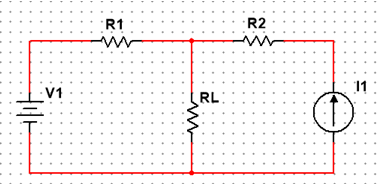
Steps to Apply the Superposition Theorem:
- Replace All Power Sources Except for One
- Replace voltage sources with short circuits.
- Replace current sources with open circuits.
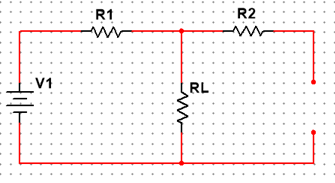
- Calculate Voltages and Currents for Each Individual Source
-
Find the current and voltage drop across each component due to the individual source.
-
Repeat Steps 1 and 2 for Each Power Source
-
Superimpose Individual Voltages and Currents
- Add these values algebraically, ensuring proper polarity for voltage and direction for current.
Key Points:
- Applicable only to linear, bilateral circuits.
- Can be applied to DC, AC, or combined AC/DC circuits.
- Cannot be used to add power.
Thevenin’s Theorem
The Thevenin theorem states that a linear two-terminal circuit can be replaced by an equivalent circuit consisting of:
- A voltage source (VTh) in series with
- A resistor (RTh)
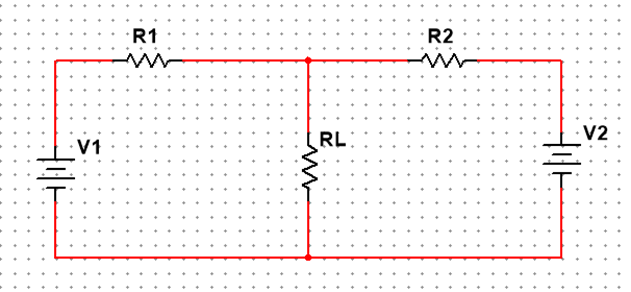 Here, VTh is the open circuit voltage, and RTh is the equivalent resistance with independent sources turned off.
Steps to Apply Thevenin’s Theorem:
- Remove the Load Resistor to Calculate VTh
- Replace the load resistor (RL) with an open circuit.
- Use circuit analysis to calculate the voltage at the open terminals.
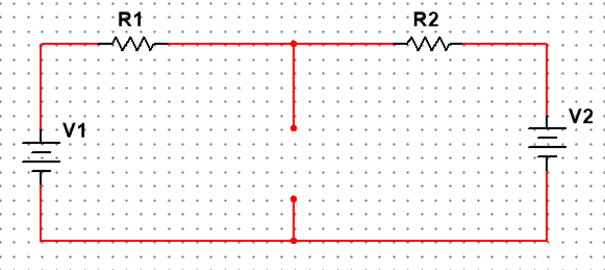
- Replace Power Sources to Calculate RTh
- Replace voltage sources with short circuits and current sources with open circuits.
- Measure total resistance at the location of the removed load resistor.
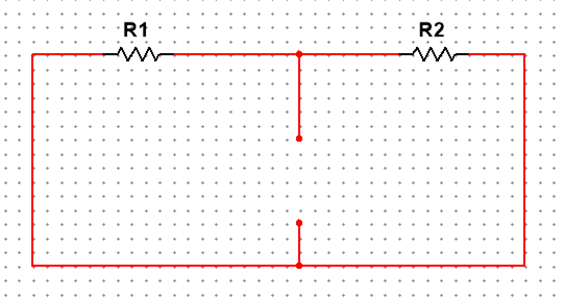
- Draw the Thevenin Equivalent Circuit
- Combine VTh and RTh to create the equivalent circuit.
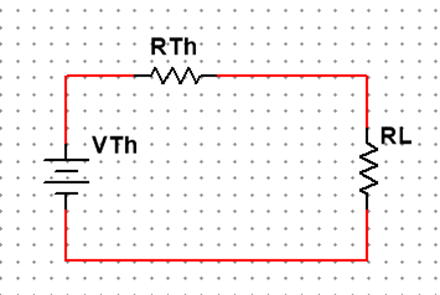
Key Points:
- Applicable to linear and bilateral networks.
- The Thevenin equivalent circuit behaves the same as the original circuit.
Norton’s Theorem
The Norton theorem states that a linear two-terminal circuit can be replaced by an equivalent circuit consisting of:
- A current source (IN) in parallel with
- A resistor (RN)
 Here, IN is the short-circuit current, and RN is the equivalent resistance with independent sources turned off.
Steps to Apply Norton’s Theorem:
- Remove the Load Resistor to Calculate IN
- Replace the load resistor with a short circuit.
- Calculate the resulting current.
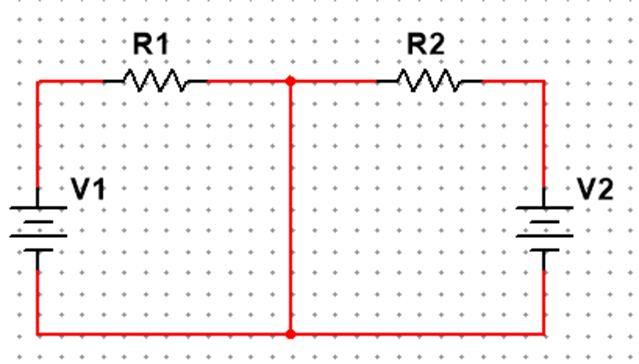
- Replace Power Sources to Calculate RN
- Replace voltage sources with short circuits and current sources with open circuits.
- Measure the total resistance at the load resistor terminals.
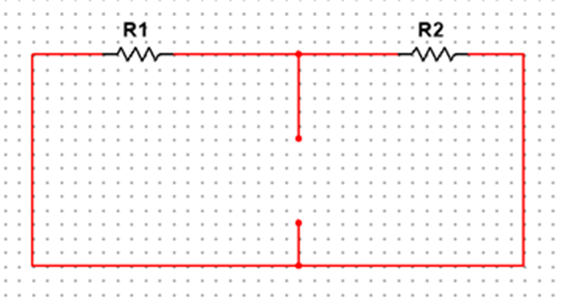
- Draw the Norton Equivalent Circuit
- Combine IN and RN to create the equivalent circuit.

Maximum Power Transfer Theorem
The maximum power transfer theorem states:
Maximum power is transferred to the load when the load resistance (RL) equals the Thevenin resistance (RTh), i.e., when:
$$ R_L = R_{Th} $$
Verification Steps:
- Convert the circuit to its Thevenin equivalent.
- Replace the load resistor with RTh.
- Calculate maximum power using:
$$ P_{\text{max}} = \frac{V_{Th}^2}{4R_{Th}} $$
Circuit Analysis Techniques
Resistors in Series
- Definition: A circuit is in series when the same current flows through all resistors.
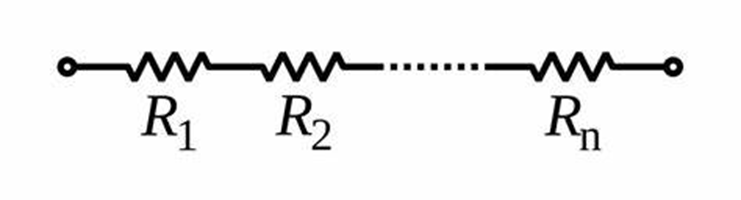
- Formula:
$$ R_{\text{total}} = R_1 + R_2 + \dots + R_n $$
Resistors in Parallel
- Definition: A circuit is in parallel when the same voltage is applied across all resistors.

- Formula:
$$ \frac{1}{R_{\text{total}}} = \frac{1}{R_1} + \frac{1}{R_2} + \dots + \frac{1}{R_n} $$
Kirchhoff’s Laws
Kirchhoff’s Current Law (KCL)
- Statement:
The algebraic sum of all currents at any node in a circuit equals zero.
 $$\text{Sum of currents entering a node} = \text{Sum of currents leaving a node}$$
Kirchhoff’s Voltage Law (KVL)
- Statement:
The algebraic sum of all voltages around any closed loop in a circuit equals zero.
 $$
\text{Sum of voltage dropssssss} = \text{Sum of voltage rises}
$$
$$
\text{Sum of voltage dropssssss} = \text{Sum of voltage rises}
$$